
Anxiety Recovery: When The Techniques Don't Work (Episode 76)
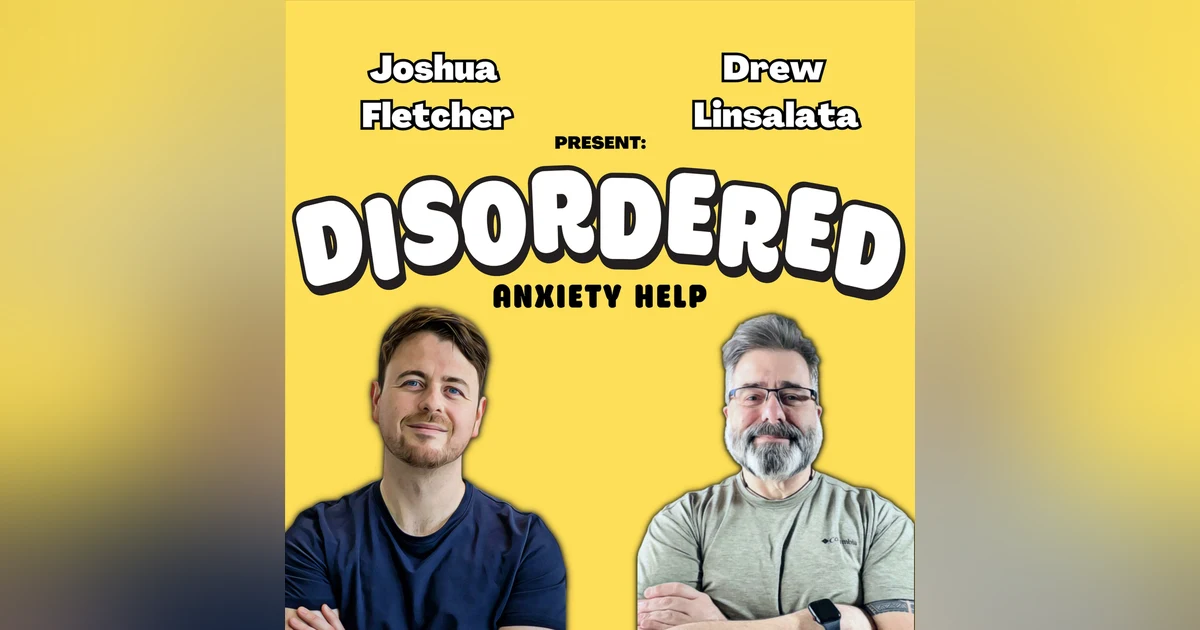

 Apple Podcasts
 Spotify
 YouTube
 Amazon Music
 iHeartRadio
 RSS Feed
 What do you do when you're working on recovery from an anxiety disorder and your techniques stop working? How do you handle those hard days when you can't make it stop or go away?
Well ... this is one reason why in the Disordered community we rarely if ever talk about tips, techniques, tricks, hacks, or steps for calming down, preventing anxiety, or managing anxiety or symptoms.
This week Josh and Drew are talking about what happens when we try to use calming, relaxation, or wellness techniques to make disordered anxiety go away. There will be surprises here ... the number one technique we use in anxiety disorder recovery is to not try to use any techniques. The most valuable lesson we can learn is that even without taking special steps, our internal experiences come and go and are not worthy of changing our lives over, even when they are highly uncomfortable or scary.
This episode also touches on the use of calming, relaxation, and stress management techniques as important parts of overall wellness outside the context of an anxiety disorder. Not everything is an exposure and acceptance problem in life. There are times when engaging in good wellness and stress management practices can be very helpful!
The bottom line this week is that trying to use techniques to directly control how you feel and what you think in an urgent or frantic way is generally a bad plan. Applying techniques to teach us how to better handle stressors and move THROUGH our uncomfortable experiences is probably a better way to go.
---
Struggling with worry and rumination that you feel you can't stop or control? Check out Worry and Rumination Explained, a two hour pre-recorded workshop produced by Josh and Drew. The workshop takes a deep dive into the mechanics of worrying and ruminating, offering some helpful ways to approach the seemingly unsolvable problem of trying to solve seemingly unsolveable problems.
https://bit.ly/worryrumination
-----
Want to ask us questions, share your wins, or get more information about Josh, Drew, and the Disordered podcast?
Visit us on the web at https://disordered.fm
---
Disordered Roundtable is coming! Think of it as "Disordered Live", a way for members of our audience to spend time with us in an intimate virtual setting (attendance is limited) to engage in real time sharing and discussion on specific anxiety disorder and recovery topics. To be notified when new Disordered Roundtable sessions are scheduled, sign up for our email list using the form on this page.
Hi to you both. I just want to say thank you for your podcast. It has helped me immeasurably for the past few months. We're dealing with um GAD, health anxiety, panic, and OCD. I just wanted to ask a question. Is it normal when on the road to recovery that you have good days when practicing techniques is easy and successful? Then you can have days where you really can't stop panic enough to let the positive thoughts and techniques in. That's what I struggle with a little bit at the moment. Thank you.
SPEAKER_03Welcome to Disordered. This is episode 76, entitled Anxiety Recovery: When Techniques Work, When They Don't. I'm Joshua Fletcher, also known as Anxiety Josh. I'm a psychotherapist based in the UK, specializing in working with anxiety disorders. I'm a previous sufferer, author of several books, and the co-host of this wonderful podcast.
SPEAKER_04And I am Drew Linsolata. I am coming to you from New York, Long Island, New York, where I am a therapist practicing under supervision, also specializing in treating anxiety and anxiety disorders, three-time author on the topic, social media dude, advocate, psychoeducator, former sufferer for many years of my life on and off. Better now, thankfully, and uh chilling out with my uh my friend Josh here, co-hosting another episode of this fine podcast. How's it going, man?
SPEAKER_03Yeah, I'm doing good. How was that? How was talking about your titles and achievements this time? Oh, it was uncomfortable of your last episode.
SPEAKER_04I hate doing it, it just bothers me. It's cringe for me. But uh anyway, thanks for asking. Appreciate it. Awkward.
SPEAKER_03Great question from the question sender Inner. Uh sometimes I use the techniques and things, and some but days are better than others, and sometimes you know they don't work. So we're gonna talk about um, you know, techniques today. Some people like them and they work. I was walking around a wellness festival last weekend, and lots of uh wellness advocates, you know, encourage practicing encouraging uh techniques to reduce anxiety and stress. And as we know in this community, sometimes they work for people, sometimes they don't. Um in earlier episodes we spoke about the concept of techniqueifying, which we'll we will readdress again today. But yeah, I think it's a it's a good it's a good topic to um to talk about. So thanks for sending it in.
SPEAKER_04Yeah, it was great. Um it was actually perfect. We came up with the topic and then heard the question. It was like, hey, here we go. That's the opener. So thank you.
SPEAKER_03Talking of perfect, we had some uh really good uh dinner anyways as well, uh, which uh I think really um suit the episode really well.
SPEAKER_04I think so. Let's listen to one of them right now. What do you say? Yeah.
SPEAKER_00Hi Josh and Drew, my name's Jane. I've been listening to your podcast for a little while now. I I've been struggling struggling, dealing with anxiety on and off all my life. Anyway, I'm gonna share. I am doing it anyway. Going away on holiday always makes me anxious. Um, we have a lovely motorhome. We're going up to Scotland tomorrow for two weeks. It's the longest time I've been away in the motorhome with my husband since he was ill and since we bought the motorhome. So I am anxious, but I'm doing it anyway. I'm putting one foot in front of the other. I'm just doing a bit of shopping now before we go, and I'm doing my best to surrender, accept the anxiety, do that willful tolerance, and just keep going. Because once I'm doing it, I'm sure it'll be fine. But uh, yeah, and I get the I wish it wasn't here, I wish it would go away, but I'm doing it. I'm gonna keep doing it, and I'm gonna keep on doing what's suggested. So thanks, guys. Um, that's great.
SPEAKER_04Big round of applause for that did it anyway. I'm doing it. I like how she says I'm gonna keep doing it anyway.
SPEAKER_03I like that, yeah. Yeah, I like the attitude. And and then when all else fails, like when we feel anxious, I'm just gonna practice willful tolerance. Yeah, you know, if we're gonna talk about techniques of today, that's the skill that we practice. Uh, regardless of your anxiety presentation, uh, willful tolerance is the thing is the one that you can lean back on and something that you can perfect.
SPEAKER_04Yeah. Maybe we should do another one because it does speak to this. The the the second we'll start with two audio did it anyways. What do you say? Again, again, again, let's do it again, one more time. Let's listen to this one because I think we can kind of dovetail into the technique thing. So let's see what we got.
SPEAKER_02Hi guys, thank you for everything you do. You've really helped me out. I just want to share a quick uh did it anyway story. Uh I have anxiety about uh being on my own and specifically along with my kids for an extended period of time. And my wife said she was going on a three-day uh event for work, and I was very nervous about it, and just leading up to it. Um I let anxiety happen. I did have a minor panic attack feelings, but I just let them happen. I didn't pay attention to them, and uh carried on and I got through the three days, and it was great. I I really enjoyed spending time with the kids. So thank you guys.
SPEAKER_04Well done. Amazing. Another great one. Let let's talk about how this sort of fits into the when the techniques don't work thing. There were no techniques in either of these. No, no techniques. Well, there was, there was one. There was one technique. What was what was that? The second one, especially. I I let it happen. I just let it happen. That's the tech, that's there you go. We want a technique. There's one. That one, that's it.
SPEAKER_03Yeah, they didn't try to fix how they felt as well. Yeah. So often when people in this community, you know, listen, we don't like anxiety, it doesn't feel very good. And Drew and I have both in the past when we've struggled, tried everything to get rid of stuff. Um, but remember, you are the technique, you are the coping technique. That's the difference. So some days you might be doing things and feel like, oh, the anxiety is not there, something I'm doing is is right, but then there's almost a false correlation there because you then start to equate feeling anxious as you not doing something correctly, or you just doing something at all. Like I need to, I'm not doing something, or something I'm doing is making the anxiety either there or it's not. Whereas, matter of fact, we're humans sometimes, particularly when we're sensitized to anxiety, we're just gonna have days where we feel anxious. It doesn't matter. We don't try to fix that.
SPEAKER_04When there's the there must be something I'm doing. I need to know why, what did I do to cause this? Because then I can certainly have a technique that counters the trigger, right? If I know what happened, then I'll know the technique to use to make it not happen. So that becomes a little bit of a fallacy, you know, in our context, anyway. That that's a dead end.
SPEAKER_03And what and what does it suggest and show about how you feel about yourself? Well, I don't believe I can tolerate it. So what's the technique that I can fall back on if it does get too bad?
SPEAKER_05Yeah.
SPEAKER_03Well, then that still shows you at the core of it all is a fear of the anxiety and the symptoms itself.
SPEAKER_04Right. I have to stop it. Now, I I think it's important to recognize that, like, and we'll talk about this. You know, Josh said you're in a wellness, you're at a wellness festival. And like in an overall wellness context, techniques for relaxing and reducing stress and managing stress and taking care of yourself, not an evil thing at all. Like there's that's not a problem. But it we really care about the context of like in an anxiety disorder context, insisting that there must be no, but there certainly there's a technique to calm down, right? There must be. Like it seems sometimes it uh people look at us like we got two heads. When you say, No, no, no, we're not trying to calm down here. That's like what do you mean? How could that be? That's that's that's a stupid TikTok thing. But what do you mean? What do you mean? Like uh little video, but uh yeah, it's the the there doesn't have to be a technique to calm down because we're always relying on the principle that says every experience we have is transient, including anxiety and panic attacks. So left alone, it will calm itself down, and that is what we really need to know and experience. That's a huge turning point.
SPEAKER_03Yeah, and one might argue, one might be a bit confused, be like, yeah, but surely that's you know, trying to calm yourself down. What are you doing in that time? Right. And it's not you're not doing anything, you're leaving it alone. Uh, it's a bit like I don't know, if you if you had a bruise on your arm and it's hurting you, you know, and you every day you keep trying to press it, prod it, scrub it, try to make it better, yeah, you're actually irritating it. And so the bruise will probably last a little longer than it should do. Then when it then, if you leave it alone, it will heal itself.
SPEAKER_05Yeah.
SPEAKER_03Uh similar with anxiety, where yeah, the ultimate goal is that we we want to live a life where anxiety isn't uh chronic, isn't there all the time. But ultimately, when we don't fear anxiety and we're uh willing to allow it to be there, when we have built up enough confidence in our ability to willfully tolerate um uncertainty, the symptoms, the feelings, it will pass quicker. We often talk about the paradox where if I don't fix it and leave it alone, it passes quicker, which ultimately is kind of fixing it, really, isn't it?
SPEAKER_04It it is. It's really hard to talk about this, like, well, there's no technique, but isn't that in itself a technique? Yeah, a little bit. Like it's true. Like not doing something is in fact doing something, it's an active not doing something. And then sometimes I conceptualize it as like, well, the big technique is no technique, but within no technique, there are in fact techniques for doing nothing, no technique. Uh how ridiculous is that, right? But it's kind of true. Like we use mindfulness skills and things like that to help us not try to fix it. So it's it could be really confusing. That's true.
SPEAKER_03Uh yeah, no, but well, it's kind of confusing, but not but really, it's just to simplify it, you're techniqueifying anxiety when there when there is urgency.
SPEAKER_05Yeah.
SPEAKER_03So what I heard from the question sender in it, great question, really good. That's why we're using it today. There's an urgency. Some days are great and things work, some days that they don't work, and I can sense an urgency there. I have an urgency to on the days it doesn't work, I want it to go away. No, and that's okay. In fact, the homework starts when you know you are anxious, and that's when you can do some really positive brain rewiring.
SPEAKER_04Yeah.
SPEAKER_03Uh from our from our good friend.
SPEAKER_04Yeah, that's true. So I think in the end, and we know that good friend, he'll make an appearance, I promise. I'm cleaning my glasses so I couldn't see the button. I think uh the but it so what does it mean when the techniques don't work? Well, what were they supposed to do? So, as far as using techniques and like uh methods or whatever you want to call them, like what is your intention? Well, I'm trying to do this to make it stop. My goal is to use a technique to feel better. That's when you have a little bit of a red flag. Like, you know, well, when the technique doesn't work, well, how do you know it didn't work that day? Well, because I I couldn't I was really anxious all day long. Okay, but that doesn't mean that it something wasn't working unless your intent is to find a technique to not feel anxious or not have thoughts or not have symptoms. In which case, yes, then the techniques will fail. And that's why we don't use techniques because life will poke through. Like if you try to recover by learning how to manage the way you feel, you might have some success with that. I think we don't we wouldn't argue that. But then when those techniques get overwhelmed, and they always will, then the house of cards comes crumbling down and you're freaking out because, like, what happened? It I I'm having a setback, it came back, my techniques didn't work, it got worse.
SPEAKER_03Interestingly, when I was walking around this wellness festival, there were all these tents and outdoor things and people doing deep breathing, breath work, tapping, and all that. And I was seeing people around, and you know, these are a lot of people with conventional anxiety, everyday anxiety. Uh, and you can see them relaxed and smiling and stuff, and that's good. And I like that kind of thing. When you have an anxiety disorder, you know, there'll be a couple of people in that group looking around, going, Hold on, I don't feel as relaxed as these lot.
SPEAKER_05Right.
SPEAKER_03And the difference is when you the focus of your anxiety is inwards, when you fear fear itself, when the amygdala is signaled that anxiety, intrusive thoughts and symptoms are the threat, then that's when it folds in on itself and it becomes a technique ifying. And that's the difference. So don't feel stupid if you know you go to a meditation thing and everyone's sat there going, I'm so I feel so blissed, and you're there climbing the walls with anxieties because their threat is probably stuff external. Maybe it's their work, their job, their relationship, stress, parenting, things like that. And so going inwards for them and relaxing is a breakaway from that. However, when you are afraid of the threat response itself and everything that's suggesting, and you're on the hamster wheel of anxiety, and you try to use techniques like conventional wellness teaches you, it's going to have the opposite effect because you're teaching the amygdala, hey, listen, the state of anxiety itself is scared, it's scary, I don't like it, I want it to go away. And so the difference is you could also be sat in a room full of people all doing exactly the same thing. Their amygdalas don't see anxiety itself as the threat, so they calm. But for you, the amygdala sees the anxiety as the threat, and therefore it probably will ramp it up.
SPEAKER_04Yeah, it's really tough. Amygdala. There you go. Um, and what winds up happening in those situations is for the other people in the room, see you like waiting for that. I was just waiting for them to finish and then amygdala. Boom, I was all over that. And the other people in the wellness tent at the festival who are dealing with external stressors, like life is going to give us, have much less sense of urgency. The issues they're addressing are certainly important to them, their kids, their relationship, their money, whatever it is, you're right. Health issues, so they're important. They're just not urgent. So when that urgency or the frantic nature of internally generated anxiety comes into play, relaxation techniques are often like bullets off of Superman. It's not going to work because the other people in the tent with you when you're at the meditation retreat are not in a constant loop of evaluating whether it's working or not. They don't need it to work. They would like it to work. They are trying to feel better, but they are not under immediate duress like you are. So, you know, the whole like, oh, but I'm having thoughts that are unacceptable. I can't have these thoughts about my grandmother or my dog or my priest. Like, I gotta stop them. Like, you are in a frantic urgent state in your own head, whereas the people around you on their meditation cushions are probably not. So they don't need to have that constant meta process that checks to see if the technique is working. And that meta process is is what screws us. The meta process to check to see if it working, it's not working, and that's where you get again. Thank you so much for the question because it was really helpful to kick off this episode. That's when you get the I don't know what's wrong. It's not working today. Well, what was it supposed to do? Oh, my thoughts were supposed to stop. That's a big ass.
SPEAKER_03Yeah, and and it's in it, it's interesting to that. So I always find it so important to define what type of anxiety. So I did a talk at this festival, it was called the Happy Place Festival, and it was really interesting where, like, you know, I asked everyone in in the tent where I was talking, like, who has anxiety, and everyone put their hands up, which is a good start, really, isn't it? It'd be awkward if they didn't. Uh, but they they they came in and and then I went through the different types of anxiety, like who has intrusive thoughts, has who has this inward stuff, who has agrophobia and stuff. And then I was like, well, that's really important to define how your anxiety presents. And I started to explain like the difference between conventional anxiety, which is just as legitimate, it's just the approach is different. So, yeah, I've got conventional anxiety, I'm always anxious about things in my life and and stuff around me. And then there's a lot of people like, yeah, I fear panic attacks, I fear these intrusive thoughts, I'm compulsively doing these behaviors, etc. And it's I think it's really important to have that definition because I was saying to some people in there, like, there was a tapping workshop where everyone's tapping there, and they're like, you know, tap these meridian points and let the anxiety go. Well, actually, yeah, it probably does help for some people and good on them. And you know I'm not gonna knock knock them for it, but as the fixator, as we mentioned in previous episode, as a fixator, that ain't gonna do nothing. If anything, it's gonna encourage kind of and and give importance to the threat response. It's interesting you mentioned about um you know bullets off Superman. I was picturing the blob. Do you remember the blob, the old blob tanks and rockets firing at it? It just absorbs it and makes it bigger. Yeah, exactly. It kind of kind of feels like that sometimes.
SPEAKER_04That is kind of that's a better analogy than the Superman analogy. You're right, the blob. Because that that when you go launching into, you know, well, well, the tapping is one, you're right. Ice packs, this, I'm tugging in my ear. I'm you know, I'm stroking my my neck to activate my vagus nerve. It's not working, it's not working, it's not working. You're you're kind of feeding it. You're right. I did an episode of the anxious truth.
SPEAKER_05Making it bigger.
SPEAKER_04You are making it bigger. So I conceptualized it. It was an episode of The Anxious Truth I did a while back called How do I accept anxiety without spiraling? Because people will often say, but I don't understand. If I if I let go, I spiral. Yeah, correct. But it's not a downward spiral, it's an upward spiral. It's like a hurricane. When the hurricane goes over warm water, it does spiral, but it spirals up because you add energy to it and it gets bigger and bigger and bigger. So like people will say, Well, I spiral, but really an anxiety spiral is not a downward spiral. It's a the funnel is the other way, like feeding warm water into a hurricane. So I've never used that. I'm gonna steal that. Go ahead, knock yourself out. You have my permission.
SPEAKER_03I can lean forward when someone asks a spiral question, and I was like, like you considered that some spirals go upwards, the upward spiral mind blown.
SPEAKER_04He's brilliant, I tell you.
SPEAKER_03Just blink really pensively, like, did you consider that?
SPEAKER_04But the techniques in in our context that we're talking about now are like the warm water for the hurricane. So, like, but if I don't, I spiral. Well, you're really spiraling upward because oh no, oh no, oh no, oh my god, oh my god, oh my god, oh my god, upward spiral. Now I'm gonna tap or get my ice pack uh, I gotta call my safe person more, more warm water for the hurricane. So shh, it spirals upward.
SPEAKER_03The better technique to learn is no technique, toughest one, no, or realizing you are the technique, which I always say about say because I think it's really powerful. I think it's so it's like no, you you have everything. Yeah, you don't need anything external, you're okay.
SPEAKER_04So a little bit of selective self-disclosure for the first, we're about how far are we into this episode? Let me look at my little timer here. 19 minutes for about the first seven or eight minutes. I was right on the edge of panic. Could you tell? I was highly dissociated in those first seven minutes. You started talking about techniques, and I don't know what it was, but boom. I mean, I've had a tough weekend, I'm really tired. So, like, I went into your dress jug is full. My my heart was pounding. I don't know if you could tell my breathing was a little weird.
SPEAKER_03Well, I have done my hair today and I have dressed well for you.
SPEAKER_04He is a little bit sharp, so I'm only human. How can I resist that kind of thing? But uh, you're right. But let's so in that situation, like what was the technique that I used? There was none. It was like, well, I'm I'm either gonna have to stop, hit the record button, and like stop this, or let it ride. And sure enough, it's where was your focus as well, Drew? Well, it was on your spectacular hair, that helped. So no, I was just trying to let you focus in. Was it inwards or was it actually? It wanted to be inwards, you know. So even as a fully, I have the temerity to write books and become a therapist, I'm so damn recovered, right? Like, that's that's pretty aggressive. But like, even in that state, my my internal state did want all of my attention, it really did. But like, nope, I have Josh is talking, so I have to listen to you so that I can answer you. And it was just I'm gonna have to listen and listen and just let it go and let it go and let it go. And sure enough, it does fade away because all experiences are transient. So there was no technique at play there.
SPEAKER_03There's two golden rules as well. You're doing what non-anxious Drew would have done, which is exactly this, and is what you're doing right now teaching the threat response that this uncertainty is okay. Well, yeah, because I'm just gonna do what non-anxious me was doing, and I'm not checking, and I'm doing this and just let it be there. Lo and behold, we're sat here, we're chilled. What do you know?
SPEAKER_04Yeah, now it's much easier to listen to you because it's not this loud thing screaming at me on the other side of my head.
SPEAKER_03But does that mean Drew is any less recovered? No, that's recovery.
SPEAKER_04Yeah, some people will argue that no, that you that you're clearly lying, then you're not really recovered. Like, how dare you?
SPEAKER_03Like, well, no, no, I I had one at the festival myself, yeah, just there, could feel it, had the urgency to run out, and I was like, nah, golden rules, whatever. And then 10 minutes later, I just forgot about it. I only just remembered it there. Yeah, I did an interview this morning um from a woman from China, she was lovely, uh, talking about untangle your anxiety. Uh, and she's she asked a question, she said, you know, what does full recovery look like? And I kind of considered it, and I was like, when you don't care when you're anxious.
SPEAKER_04Yeah.
SPEAKER_03She's like, What? So I thought, isn't recovery the absence of the symptoms? I was like, kind of, but not really. It's just when you don't really care. Because you can't erase anxiety, everyone gets anxious, but it's just when you don't really care. Yeah, well, it doesn't bother you.
SPEAKER_04If you hit that target, like I'm not really so concerned about it. It was so funny that you brought that up because I found an old episode of The Anxious Morning that I wrote when I and I wrote an anxious person cares all the time about how they feel. A recovered person still does care, just in very short. Short bursts and those bursts are not connected to each other. So like for about 30 seconds, I really did care how I felt. That was true. But then that caring was replaced by the same.
SPEAKER_03Yeah. Same. Yeah. Yeah. In short, you're absolutely right. The short bursts, like, yeah, for the yeah, there's about a minute when I was in that tent, I was like, oh, I really care about this.
SPEAKER_04I can't not care.
SPEAKER_03But yeah, and and and literally 10 minutes later, I'm not even thinking about it. Right. You know, whereas to you know you're in the hamster wheel and you're struggling in the depths of disordered anxiety when that becomes the point of focus for the next three weeks.
SPEAKER_04And then if you go back to the topic today, the techniques, you know, well, what my techniques aren't working today. I might, if I was maybe at a different time in my life, I would have said, well, clearly I did something wrong because look at the experience I just had. So the techniques to stay calm weren't working today. But I don't, I'm not looking, I'm not evaluating that experience in any way, like, well, what did I do? Yeah, I'm really tired at a long weekend, whatever. So maybe that was it. But the I think the point to tie it into today's topic is there was no technique to use other than don't use any techniques. Like just keep listening to Josh and answer the questions as best you can. And that's it. Like that that was it. There was nothing to do.
SPEAKER_03Yeah, but Drew, what if you were still anxious now? What if the anxiety didn't pass after nine minutes? What would you do then?
SPEAKER_04I would still be doing the same thing. You know, there's nothing you could really do about that. Does it get harder? I think it does, but but I could I can answer that question. I don't mean to make this episode about me, by the way, but I can answer that question that way because I I'm not afraid of it. There's no fear of it. It is very uncomfortable, but I'm not afraid of it, so I don't have to make it go away. Whereas if you're still in a situation where you haven't quite learned that you don't have to fear it yet, I do understand that the idea, well, what do you mean you let it go on for a full 40 minutes? That's ridiculous. Like I know, because today you are still afraid and therefore believes that you need techniques, but not using techniques is how you learn you don't have to fear it. Whereas using techniques means no, I I remain afraid of it, I have to make it go away when it starts.
SPEAKER_03Yeah. Um, a lot of people listening might be anxious all day and stuff like that. Sure. I've had full days of kind of low to medium level anxiety, usually around stressful times in my life as well. But again, the principle stays the same. Yeah, it's like I kind of get it. Like again, that metacognitive awareness, like, kind of get why I'm gonna be anxious all day. My brain and body's trying to say that your stress levels are through the roof. Yeah, I'm just not adding that secondary fear. That's not true. Just like, yeah, it's annoying. I have an emotional reaction to it. Um like, yeah, I'd rather not have this, and it's annoying. But it's just the same, I treat it the same as if you know, I strained a muscle at the gym. You know, if I've gone to the gym, done, you know, worked out too hard and strained a muscle. Am I gonna then be annoyed at the strained muscle until it until it recovers? No, I just know that the muscle will repair itself. Yeah, it's the same. You go all day with a strained muscle and go to sleep with it. And sometimes you will get days where you know you might feel anxious all day, but that willful tolerance still applies. And the focus part is so important as well. Like I notice I'm anxious and stuff like that, but I'm not really focusing on it, I'm just allowing it to be there, sat in the back, because I know it will pass. And in the past, I used to freak out. I used to be like, oh, it's been two hours now, it's never going away. It was four hours now, it's never going away, or it's going, nah, it always passes. All good.
SPEAKER_04I think the all day or the protracted, it's not a full-day panic attack. We'll talk about that some other time, but it's a full day of just, I'm just agitated and anxious and simmering, it almost feels like I might panic at any time. I do believe that sometimes that's even more difficult. We're never trying to compare, oh, my anxiety is harder than yours, but it requires a lot of patience. Those days do require patience, you know. Like, so in a way, your your your resolve is tested more. But it's like, oh, this is wearing me down now emotionally. I don't like this, I'm disappointed, I'm angry at this. It becomes harder to remain non-resistant to it because we get a little riled up, and and so we can acknowledge that it is difficult to deal with that, and sometimes stuff is gonna come up. And if you got to scream and yell and hit a pillow or cry a little bit because you're anxious, go for it. It's okay, like you got to let that out somewhere.
SPEAKER_03Have an outlet, yeah. Of course, yeah, you gotta let that out somewhere.
SPEAKER_04You're not just trying to robot your way through that that all-day anxiety, that's not fair.
SPEAKER_03Uh, and the longer it goes on, the more louder our friend gets. He gets his megaphone out and starts to go inwards with you.
SPEAKER_04Yeah, he does, and he's gonna tell you all kinds of bad things about yourself and how you're failing. It's Craig the critic. Because that's what he does.
SPEAKER_03What are you not doing right? You're not getting the techniques right. Yeah, you're not learning enough, you're not doing it properly. Nah, nah, nah.
SPEAKER_04Clearly, you're not never gonna get better. That's a famous one he comes up with. Clearly, this means you're not getting you're never gonna get it. You're never gonna get better. This is your life now. Like, what are you talking about, dude?
SPEAKER_03So yeah, absolutely not, and particularly with anchor points as well. So, again, going back to the question, the question, you know, the tech certain days when I'm trying to apply what I've learned and techniques, etc. etc. You know, it sometimes the practice is when we feel most doubtful, you know, and you can get better. It's okay.
SPEAKER_04Yeah. Maybe the reframe, you know, in a situation I might offer a reframe. What do you do on days when the techniques aren't working? It might be, well, oh, today the today it's not working. Maybe the reframe is well, today is really challenging for me because it is. You're like we're not going to try to deny reality. Like, this is a really challenging day for me because I'm I've had multiple panic attacks, or my anxiety is really high, it's going up and down all day. I can't seem to get a grip on it. I'm feeling really challenged right now. I've been afraid all day. Like factual statements that acknowledge your experience are never wrong. But the reframe is today is really challenging, not it's not working, it's just I'm really being challenged today, and I really have to practice today.
SPEAKER_03And acknowledging the external factors as well. We live lives outside of anxiety disorders. Don't make anxiety the center of your life. There'll be other things going on, work, relationships, things, stresses. Maybe you slept like crap, maybe whatever. You maybe you had a few wines the night before. There's different factors and variables that will contribute to your mood and your resilience. And that will that might feel paper thin some days, and why it feels like anxiety is there. But it again, just try and step away from the binary view of success where I'm not anxious, I'm I'm doing everything right. I am anxious, there must be something I'm doing wrong. Yeah, no, the homework starts when you are anxious, and how do we respond to that?
SPEAKER_04Yeah, that because that's the that's the job. It's like, okay, when I'm when I'm struggling, it that's the most valuable time, to be honest with you, in the context of anxiety disorder recovery. Like when you're challenged, that's when the heavy lifting is done. So it's important to recognize that, and in a way, you have to embrace that. Like, oh no, this is the time that I'm actually doing the work. It's great if I'm having an awesome day and I'm not anxious and I'm happy and I'm enjoying my life. Like, that's great. I'd love that, but like that's not the day that you're actually actively recovering. I don't want to get people to get a little too obsessed with this, but like, yeah, you there's a reason why we do things like exposures to intentionally struggle.
SPEAKER_03So that's how we're and it's the reframe, yeah, exactly. So like I've had a day off. Yeah, I've had a really nice day, and that's good. Awesome. Have as many of them as you can, but the reason why we we reframe it is oh, anxiety's here. All right, okay, back to work.
SPEAKER_04Yeah, that's exactly right. Let's talk about a good segue into like the life stress, too, because this is where, and Josh said it before, like and you're at a wellness festival, you might be talking to people who are talking about general like life stuff, wellness, stress management, anger management, maybe, like just taking good care of yourself. If you are working on an anxiety disorder, who works on an anxiety disorder? But if you if you're dealing with that and you're trying to come out of that and improve your well-being, but you're also in a super stressful situation, maybe there's a loss in your life, or you have money troubles, or your relationship has got a problem, or whatever, your dog is sick, it doesn't matter. You have to start to cultivate the ability to see the difference. Not everything is a Claire Weeks problem. And I think if you're living in a really stressful situation where you wake up in the morning and your stress level, even if you didn't have an anxiety disorder, would be at six, it starts at six because you hate your job and you get 18 projects and the kids are driving you crazy and you're behind on your mortgage payment. It's really hard to do anxiety recovery work, anxiety disorder work if you're also living in that. So there are times when you do have to look at like what can I do to like deal with my overall stress level? That matters.
SPEAKER_03Yeah. Yeah, definitely. And that's where techniques do work. So I think the message what we're saying in the in the in the in this episode is use techniques as long as they're not done with urgency. If they're done with urgency, they're a compulsion, they're a safety behavior. If they're done a technique done to improve overall mood and lower stress, that's great. Stress reducing techniques, yes. Immediate, urgent, I want to shortcut and get rid of my anxiety, no. Yeah.
SPEAKER_04Yeah, I love that. I the world is pressing on me, and I want to find healthy ways to catch that pressure and and manipulate it and move around, move through it, good. I want to control how I feel, not so good. Because it's really hard to control how you feel.
SPEAKER_03Urgently control how I feel. Yeah, but I think I might argue because we always control. I do relaxing exercise because I am trying to control how I feel. I want to be in a better mood for the week tomorrow. So I am, I do want to control how I feel. Yeah, just has not with urgency to change it instantaneously.
SPEAKER_04I would I would argue a little, it's not really an argument. I agree with you 100%. If I sit and meditate every morning, which I do, am I controlling how I feel? I kind of am. But only because that practice helps me, it's like judo, right? When your appointment, your opponent comes at you, or for whichever, is it Aikido? I don't remember which of the martial arts, they probably all do it to a certain extent. You learn to use your opponent's momentum against them, right? So instead of trying to stop them dead and knock them on their ass, no, no, I'm gonna go with that momentum and move them past me and put them on the mat. When we meditate and do our relaxation, you like play video games, I like to listen to music. Like, I'm learning how to how to carry the life stress better, and therefore I feel better. Carrying it. Right. And therefore I feel better. So I'm not directly trying to like let me calm my heart rate. That's an indicator that I'm getting better at managing stress, but that can't be my primary goal. I'm splitting hairs. We could talk about this for hours.
SPEAKER_03Stop splitting hairs.
SPEAKER_04Stop splitting hairs, you bastard. Yeah, like I'm getting really nitpicky.
SPEAKER_03Carrying the momentum. Yeah, I like that a lot because it's like you're not trying to, yeah, you're not trying to smash it or freeze it or get rid of it. You're just right, I'm learning to kind of carry it with more gently without kind of trying to yeah, carrying is not resisting either, is it?
SPEAKER_04It's not. That's it. I know I have to carry this. This is life right now. I can carry it a few steps and then gently put it down and pick it up again when life makes me do it. I have to do that. Whereas in the urgent anxiety disorder thing, no, no, no, I'm literally trying to make my breath slower and my heart rate lower right now. I need that to happen right now. No, it's you know, that's really a big ask. It's almost impossible, and that's why people get frustrated by those things, too. I think so.
SPEAKER_03Tell you what, I was frustrated with at the uh wellness festival when I was looking around. Um, a lot of the messages have to do with regulation. And in my head, I was just walking around and I had one noise in my head walking around. Yeah, we know what it is, too.
SPEAKER_05Regulat's one of my favorites.
SPEAKER_04Roll out.
SPEAKER_03I was just like, I was like, nah, like come and regulate, but no, I'm good. I'm all right, I'm alright being dysregulated. I don't need to intervene. Yeah, we did a whole episode. Everyone's looking at me like, we know. You're right, get out of here. You're gonna you're the only person ever banned.
SPEAKER_04Uh you're the first guy ever to get banned from a wellness festival. Why did he get what did he start a fight? No, he was I've been banned from many. He was welcoming dysregulation, so we had to remove him from the present premises.
SPEAKER_03But he wouldn't pull on his earlobe.
SPEAKER_04That is just anarchy. If we're not gonna pull on our earlobes, would have got left. So I get it. But good topic, you know. Yeah. What do we got? Should we move on to some community questions and wins? You uh you're gonna surprise me with these. I don't know what you're gonna read, so let's do it.
SPEAKER_03Uh let's have a look. So, question uh I found your they've not given me permission to use the name. I found your podcast last year when I was struggling with sleep anxiety and thought I was going insane. Your episode jerked me back to life and shifted my perspective. Since then, I've been in therapy for seven months now, and my sleep has improved greatly. That's really good to know. I have a question about anxiety and empathy. Now I'm going through another anxious period in my life, but caused primarily by all my loved ones experiencing bad things. My fiance's mother had a very bad illness and passed away within two months. Simultaneously, he was also almost fired from his job and robbed at gunpoint on the street. I stopped sleeping, knowing how depressed and traumatized my fiance is.
SPEAKER_04We could do a whole episode just on this.
SPEAKER_03Yeah.
SPEAKER_04This is where I think, as an anxious person, I sometimes think that the definition of empathy gets a little twisted. So empathy for an anxious person might be, yeah, you could be empathetic, this, and that's a great quality to have, right? I'm concerned about my loved one because I know they're under duress right now. That's great. You love that person, it's okay. But I am so sensitive to my own internal state that I also assume that they are, which is I think a mistake that we make. That's not what empathy is. Empathy is not I know how you feel. Empathy is I understand you're you're under duress right now. But it is incorrect to think that you know exactly how your fiance feels just because you once felt that way or used to or are still a little worried about feeling that way. So I think sometimes people with anxiety disorders get a little bit twisted in what empathy is. No, no, you see somebody else feeling anxious and you remember what that felt like for you, so you assume they feel the exact same way, but they don't always, yeah.
SPEAKER_03Also, as well, like, and don't get me wrong, that will make you stressed. Oh, sure. Sounds like you and your family have been through a lot. Yeah, 100%. But obviously, we're we're answering your question for you and your and your struggles and just be wary of the fawn response as well. How much of this is actually an overactive fawn people-pleasing response? Yeah, just as a as an element to consider. You're right. I think the question's so good because you're like, I don't want to lose empathy. It makes me human and probably a kind, compassionate person. So, yeah, spot on. But then how much of that is actually maybe slipping into people pleasing and as Drew said, kind of projecting our own anxiety onto other people's because we think that they may be experiencing that too.
SPEAKER_05Yeah.
SPEAKER_03Um, also, you're gonna just have anxiety because there is anxiety inducing, you know, you care for these people, and you know, they're going through bad things. So, yeah, but I think you've done half the work there because you can spot it, you can identify it, and you can identify where the line is. So, I'd actually encourage you to find where the line is and be like, okay, this needs this, maybe the rumination can stop here. Yeah, maybe the focus can stop here because you've already done half the work by identifying it.
SPEAKER_04I think that and part of that is this is such a good topic. I love this question. Part of that is recognizing, you know, that that principle of radical acceptance comes in. It's not always just accepting anxiety symptoms, it's accepting life sometimes. And I'm I'm a huge fan of ACT, you know that. So like, yeah, sometimes bad things happen to the people we love in our families and our social groups. Like, that is true. No amount of thinking about it can change or prevent that. So sometimes I think we get caught up in the idea, sometimes it's an identity-based thing. Like, I'm the empathetic person. It it's the right thing for me to do to sit passively and wring my hands actively, because that shows that I'm empathetic and I love this person. But no amount of anxiety thinking, ruminating sympathy feeling for them, no amount of pondering how they feel will change how they feel. None. Zero. That is an internal experience that only we have. We are not making another person feel better by how we feel. So there's a level of acceptance that says, I just feel bad because my partner feels bad right now. And that's that's because I'm alive and human and I love this person. But does it have to be the most important part of my day that I feel bad, that they feel bad? Yeah, it's complicated. This is a complicated topic.
SPEAKER_03Also, ignore Craig the critic when he'll suggest, well, if you're not thinking about it, it means you don't care. That's right.
SPEAKER_04A loving person would be crippled right alongside them, wouldn't they? No, yeah, yeah, yeah.
SPEAKER_03That's that's internal critic stuff. Yeah, we could we could just do a whole episode on that. But a really good question. Thank you for sending that in. Yeah, I'm just aware of the time with this episode, so I'm gonna save the did it anyway. I was gonna read out for the next episode.
SPEAKER_04Sure, so yeah, works for me. Yeah, anything else to save while we wrap it up here?
SPEAKER_03No, just a big thank you for everyone tuning in, uh leaving nice reviews. If you've uh would like to leave a review and the podcast has been helpful, please uh leave a review on Spotify or Apple Podcasts. We really appreciate that. It helps um other people be able to access the podcast organically. We're um but yeah, thank you for tuning in here on on Fridays and uh yeah, catch you soon.
SPEAKER_04Yeah, we'll see you next week. If you have something to send in and you want to participate, disorder.fm has got all the goodies. See you guys next week.