
I Get So Anxious When I'm Sick! (Episode 91)
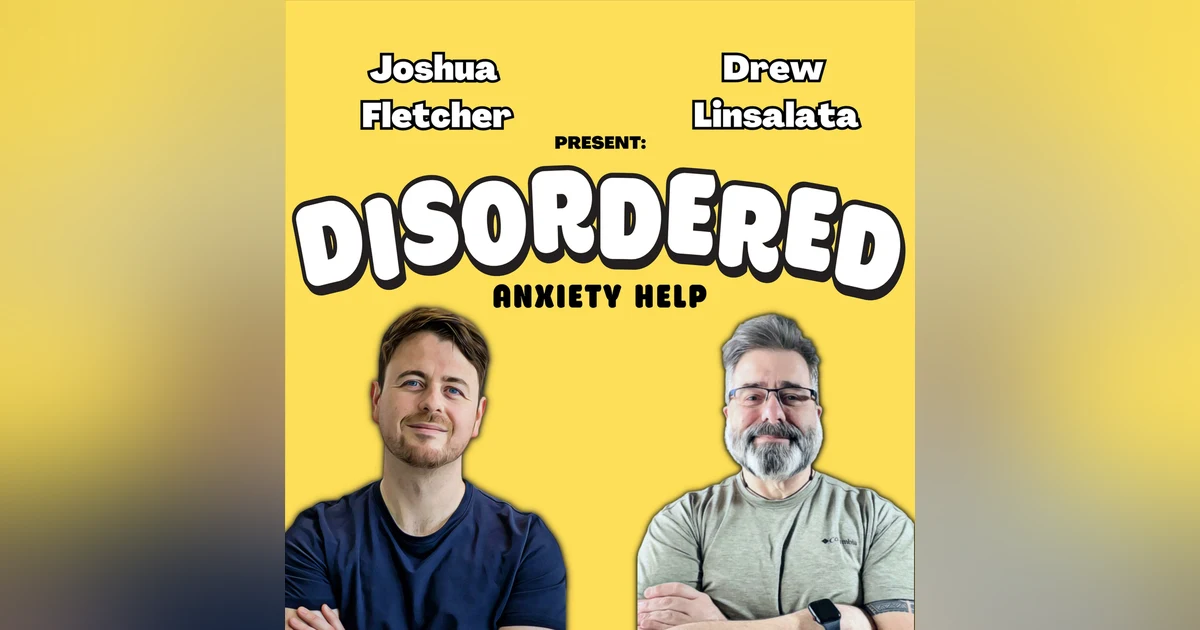

 Apple Podcasts
 Spotify
 YouTube
 Amazon Music
 iHeartRadio
 RSS Feed
 "When I am ill, my anxiety goes through the roof!"
Does this sound familiar? Many people struggling with disordered anxiety will say that if they get sick or feel unwell (i.e. a cold, a sore throat, the flu, etc.) they find that they are extremely anxious. If you experience this struggle, its not just you.
This week Drew and Josh are examining the mechanics behind your over-productive threat monitoring system and why being sick or unwell can often push you into high alert mode with your anxious mind constantly scanning, measuring, evaluating, and worrying about how you feel moment to moment.
Anxious people are generally terrible at tolerating discomfort and uncertainty, and that nasty sinus infection that has you down is probably also doing a good job of triggering both of those things.
Here's a spoiler alert (but listen anyway) ... choosing to actively involve yourself in persistent worry and body scanning and evaluating your safety when sick is not keeping you any safer or making you feel any better. Get the medical support you might need of course, but once you have your plan and you've DONE all you can do ... its time to practice tolerating that feeling of discomfort, the fear, and the uncertainty.
---
Disordered Roundtables are here. Think of it as "Disordered Live", a way for members of our audience to spend time with us in an intimate virtual setting (attendance is limited) to engage in real time sharing and discussion on specific anxiety disorder and recovery topics. To be notified when new Disordered Roundtable sessions are scheduled, visit our homepage and get on our mailing list.
---
Struggling with worry and rumination that you feel you can't stop or control? Check out Worry and Rumination Explained, a two hour pre-recorded workshop produced by Josh and Drew. The workshop takes a deep dive into the mechanics of worrying and ruminating, offering some helpful ways to approach the seemingly unsolvable problem of trying to solve seemingly unsolveable problems.
https://bit.ly/worryrumination
-----
Want to ask us questions, share your wins, or get more information about Josh, Drew, and the Disordered podcast?
---
Disordered Roundtable is coming! Think of it as "Disordered Live", a way for members of our audience to spend time with us in an intimate virtual setting (attendance is limited) to engage in real time sharing and discussion on specific anxiety disorder and recovery topics. To be notified when new Disordered Roundtable sessions are scheduled, sign up for our email list using the form on this page.
Hey Josh and Drew. My name is Cara and I'm a fan from Germany. I've been listening to your podcast for quite a while now, and it has helped me a lot. I even listen to your podcast when I'm doing well because you two always manage to make me laugh. Um my bad days, your words give me courage to keep going because currently I'm not doing so well. I've been trying to avoid getting sick for the past year because the thought of catching a cold with all its um symptoms and sensations scares me. Yeah, guess who's currently lying in bed with a cold? That's me. I just wanted to ask about your thoughts with increased anxiety while dealing with being sick. Is that a thing? It's really um, yeah, I don't know. I'm really struggling with these sensations in my body, although they're completely normal, and I should be able to catch a cold sometimes. I hope you know what I mean. Um, yeah. Thank you for everything. Bye.
SPEAKER_02Welcome to Disordered. This is episode 91 of the podcast entitled I Am Afraid to Get Sick. And we really mean get ill. So let's not confuse it with the emetaphobia thing. I am Drew Lynn Solata. I am a therapist practicing under supervision, treating anxiety and anxiety disorders in the state of New York. I have no words this morning. Clearly, I'm stumbling. I am a three-time author on the topic of anxiety and anxiety recovery, social media dude, psychoeducator, advocate, former sufferer, but doing better now. And uh, yeah, one of the co-hosts of This Mind Podcast.
SPEAKER_03I'm Joshua Fletcher, also known as Anxiety Josh, and I'm a therapist, an author, and podcast co-host, specializing in anxiety, based in Manchester in the UK, author of several books. I've started writing my latest book, which will be called Same Time Next Week. There's a preview for people. I've only said that publicly now. Um, yeah, and I really enjoy this part of the week.
SPEAKER_02Very good. I'm afraid to get ill. We'll say ill, I guess. We mean what are we talking about? Like get the cold, get a flu, I get an ear infection, that sort of stuff. Not to be confused with stomach sick. Although that's included too.
SPEAKER_03No, that's included too. I'm just afraid to get unwell. A really common one. I also had this. Um, it kind of coincided with anxiety around side effects around medication or just getting ill. COVID, it was massive. You know, I'm afraid to get COVID. Um, because ultimately people with anxiety disorders don't like any change in the status quo or the default of how they feel. They want to stay neutral, default, not no too highs, no too lows. And when we're constantly threat monitoring, scanning our bodies for signs of change, for any signs of an of an anomaly, we become frightened. And so people then start to pin the threat on getting sick, like getting a cold, getting the flu, getting norovirus, ear infection, like you said, Drew. Because it's a change in the default state, and because we're afraid of anxiety or afraid of how it'll affect our mood, suddenly the threat response latches onto that. What do you think?
SPEAKER_02Yeah, I agree. We could probably change the title of this episode to I'm afraid of how my body feels, because the sickness or illness, unwellness, however you want to call it, will change how you feel. But really, it's anything that will make me feel different. This is related to alcohol and caffeine and foods and exercise and all this stuff. But specifically, I think getting getting sick or catching a cold or whatever is even scarier for people in our community because there's no control over that. How long will I be sick? How long will these feelings last? When will it go away? What can I do? How can I prevent myself from getting sick? And sometimes you can't. There are just germs, and we get colds and we get the flu and we're miserable for a week, and that's just the way life is. But uh, I don't think I had this, but I was afraid of anything that made me feel different. So I get that. I just didn't connect it to being sick for some reason. I don't know why.
SPEAKER_03Oh, I did. I'm with I'm with Kaur on this one. Um, yeah, I used to avoid anything, and then when it was excessive, you know, you can even go into the OCD territory, you know, fear of contamination, contaminating others. From a panic disorder point of view, it's I don't like anxiety, so I'm afraid that sickness will make me more anxious. You know, I'm afraid to get a call. Um, what it sounds like Cara's doing, thanks for sending that in, by the way. Cara sent that in on disorder.fm, where you can record voicemails or send messages. But it sounds like Kara's become sick, and her rational brain knows I'm impaired, I'm unwell, but Kara's attention will be the problem here. Why do you think I say that, Drew?
SPEAKER_02Well, because in the end, we we've talked about this now. Shock attention resistance. Last uh, was it the last episode we did or a couple episodes ago? We did an entire episode on attention. Like attention is pretty much almost the entire problem. And I think when we get sick or we're unwell, it is something that is unpleasant and it's a little bit loud. You it's hard to not feel what you feel. And so it's gonna get your attention anyway. Even non-anxious people that are going through having a cold or the flu or whatever are going to complain about it and like, oh my God, I feel so horrible. When is it? Yeah, we it gets your attention, it really does. And then when that feels like a threat, then that attention is gripped even more, I think. So something that's already gonna get your attention because we don't feel good is is gonna be magnified 10 times already, because not only do I not feel good, but I fear this feeling. I don't know why, I just do. And yeah, so I I want to do nothing but focus on it. I don't know what day Carla, I was just looking to see when did Kara send that in. I can't find the date, but it was a while ago. So, Kara, if you're listening, we assume that you're feeling better.
SPEAKER_03Four days ago.
SPEAKER_02Okay, it was four days ago that she sent it in. So, like the question would be like, Kara, if you're listening, how do you feel now? Like, send us a message, go to disorder.fm. You know, you're gonna hear this a week or so after you probably are out of bed and back, you know, among among the world. And but that it's that fear of like, how long is this gonna last? So I got to keep monitoring it. Let me keep watching it, let me keep watching it and see is it getting better? Is it getting better? Is it better now? Is it better now? Yeah, you don't know when it's gonna get better, you're screwed.
SPEAKER_03Yeah, yeah. And because you can't leave it alone. Illness adds a negative variable that we compulsively threat monitor for. Is it better? Is my anxiety getting better? Is it getting worse? Is the illness getting better? Is it getting worse? And ultimately it fuels this uncertainty. But as we know, recovery is about doing what non-anxious us would do. And guess what? Non-anxious us will become ill, sick, unwell, and get these things. Um, particularly, this kind of hits people who find it difficult to stop. Uh, and people who there's people in my life who wouldn't say they have an anxiety disorder, but they are always busy, they're always on their feet, they they find it difficult to stop, they feel guilty for stopping. And these people, when they become unwell and it kind of forces them to slow down a lot and stop, then they're faced with thoughts, uncertainties, symptoms, and emotions. And that's another reason why people fear becoming unwell, is because it's like, okay, there's a discomfort here, and then there's also another discomfort in the sense that I have to feel things that I've perhaps been putting off.
SPEAKER_02Yeah, I think there's two aspects to this. I fear being unwell. I I either think that the the symptoms themselves or the feeling of unwell is going to lead to some other health catastrophe. That's one like fear, or it just makes me more anxious, and now I have to be anxious. So it's not even so much that I have the flu. I've heard people say this, like, yeah, I don't like being sick, but it makes me anxious, and now I have to endure being anxious. Like, but how do you separate those two? I'm anxious because I'm sick, and I don't know how long the sickness is gonna last. And it's not really about the sickness, it's about I get anxious about being sick, so I can't get away from the fear for four or five days, or however long it takes for this to start to resolve. And that's you know, then there's multiple layers there. Well, what is it about the sickness? Are you worried that you're gonna wind up having to go to a hospital or needing a doctor? Like, well, no, not really. I just get really anxious, and now I have to be anxious for five days, and there's nothing I can do to stop it. You know, that they're looking for like, oh, my anxiety will go away when the illness goes away, and so they just have to wait. There's nothing you do.
SPEAKER_03Also, my advice would be to, in the words of the metal band disturbed, get down with the sickness, you know. That is your exposure. You gotta get to it. You like, oh okay, I'm ill, I'm ill. No, that's what you're gonna get ill in life, you know, and and that is the exposure. I'm now here's a chance to teach my brain that I'm still okay when I'm not okay. You know, like like I don't feel great, but that when we spoke about primary fear and secondary fear, an illness is a is a is a chance for you to rewire the brain um in terms of eradicating secondary fear too. So you can do the exposures then. It's not all just about getting your shoes on and going to scary places, it's about existing at home, even in first gear.
SPEAKER_02I think that's even harder for some people because it it's a you know, do what not anxious me would do. Yeah, okay, maybe I'll get out, I'll I'll attend a social event, I'll go to a concert, something, and that's engaging. But when you're really sick and you can't do anything but lay in bed and blow your nose every two minutes, there's not a whole lot to occupy you. And so it becomes, I think, an even more difficult like being with. That's where like the skill of that that practical mindfulness skill of going into being mode instead of doing mode really, really comes in handy. It's like I can't do anything, but the best I could do is get up and shuffle to the bathroom and like go back to bed and sleep for a little while. That's all I got. So there's nothing to distract me.
SPEAKER_03But that's it's a perfect thing to practice your attention, yeah. You know, and notice when you're compulsively checking yourself. You are the inwards compulsors, Cara, you're inwardsly compulsing. Sorry. You know, and it's just like, it's okay, I'm unwell, that's okay. Where's my attention here? Actually, it's 90% on how I feel.
SPEAKER_02Yeah.
SPEAKER_03It's like we'll try and reduce that.
SPEAKER_02I think one valuable like framing thought, and we're, you know, we're never trying to knock this down with just cognitive reframing, but you know, an illness is gonna run its course. So those three days, five days, six days if you're unlucky, are gonna pass no matter what. So, what do I how do I want to spend them? You know, so it's the whole like this is gonna this is gonna be forever. How am I ever gonna get through it? You have no choice. You will, in fact, get through it because the arrow of time is a bitch and it never stops, and those days are gonna pass. So that was something that used to help me on longer-term challenges. They might not have necessarily been illness challenges, but like these three days are gonna go by no matter what I do. So, how do I want to use these minutes and hours? It still wasn't easy, but it's gonna pass like everything else does. So, sitting and wringing your hands actively and choosing to do that for five days is almost pointless when you think about it.
SPEAKER_03And focus is always in your control. I know it feels horrible to turn your back on it. And I know I know exactly what this feeling's like, Kara. I've even had a bit of it recently. Uh, I did my own Did It Anyway, which I will share, which is I don't like the dentist, a bit of a phobia. Um and I hadn't been for five years. Now, not the typical stereotypical British thing. My teeth are actually lovely. I look after them. But um I did my own exposure, so I went, sat down, had a checkup, went and had a fill-in, went back again for an x-ray, and then the dreaded, yeah, that tooth is so bad, we need to pull that out. Uh, and so I went for yeah, sat there, had the numbing stuff, which has adrenaline in, by the way, which is a good exposure. So if you ever have the numbing stuff, there's a literal adrenaline in it, and and it's it's really kind of comforting actually because when you have the adrenaline, it feels just like having an anxiety disorder for 20 seconds. It's like, oh, this is the feeling I was afraid of for so long. Uh, and it's there, but obviously with psychoeducation, and they drilled, snapped, oh they they got pliers, they pulled ripped this thing out, yeah. They didn't really, yeah, and and they did a very professional job. I didn't feel anything, but you know, it's just it's the concept of it anyway. But obviously, they gave me these medications and all these things and sedation, and then yeah, I did feel a bit like, oh, how's that going? Is it gonna get infected? That stuff, and then I catch myself like, hold on, I'm threat monitoring here, and this is gonna pass regardless. And if it does get worse, my rational brain will tell me this threat response doesn't need to be the one that it takes and looks after this part, and the same applies with a cold, the same applies with flu or anything. Obviously, check with the doctor if you're unwell, but knowing that the body will repair itself is a good thing to do.
SPEAKER_02Sometimes you have to confront, you can't just you let me be careful how I say this because I don't want to be dismissive. But when I said before, it's worthless to sit and actively decide to wring your hands over this. It is it is genuinely, literally worthless. Because anxious people will confuse thinking and actively worrying and ruminating with problem solving, fixing, or safety. But they are not. There's nothing that you can do. Thinking about being sick has nothing to do with getting better, nor does it have anything to do with keeping you safe from your anxiety. Does that mean that you could just turn that off? No, of course not. I'm not meaning to imply that, but it does tell you why it is safe to take the risk of maybe putting your attention somewhere else. And you're right, the time is gonna pass no matter what I do. And it's also not predictive. Like your brain is gonna want to go in predictive mode. What's gonna happen next? Don't know. The answer to that would be like, I don't know, but if we have to deal with something, we'll do the best we can if we have to. It's not happening now, yeah.
SPEAKER_03Yeah, and and with Cara's question, it's like she knows her rational brain knows that she's fine. Yep, it she just sounds like she's it's sticky and she finds it difficult to leave it alone just in case. Because the just in case machine is is fired up, yeah. But we ignore the just in case machine.
SPEAKER_02I think the other thing that oh, I'm sorry, Josh. I stepped on you. Yeah, you did. How dare you totally stepped on you? It was very rude. By the way, kudos on the disturbed reference from earlier. I didn't see that coming. Even when you said disturbed, I'm like, what's he gonna say? Cara, that's your homework. Listen to that. You get down with the sickness. Yeah. I think the other thing that comes out in Kara's question, which is is a really good question. I appreciate that she sent it in too, is you know, when you're at the point, so she's laying in bed, she's obviously not feeling well, and she's really afraid of the state that she's in, to the point where she goes to disorder.fm, fires up the voicemail tool, and asks us, what do I do about this? And I get that. I'm not picking on you, but what can I do about this feeling? And even when you're sick, it doesn't mean that the rules change. The answer is nothing. Feel it. The rules don't change. The rules don't change, even though, oh, well, what do I any thoughts on what to do when you're anxious because you're sick? Same thoughts that I would give you when you're anxious when you're not sick. So, what what do I can I do about this? Is nothing. The harder you try to do something about the anxious feeling, the longer it's gonna linger. So nothing. We do nothing about it.
SPEAKER_03Absolutely. We'll talk a bit more about this, but I would like it did it anyway, if that's okay. Particularly if you've got any about traveling up to Arizona to do something scary. Let me see what I have. Let me look through the files. Oh, we do. Hang on.
SPEAKER_01Hey, Drew and Josh. My name is also Drew. Feel free to use my name. I'm from Massachusetts, just north of Boston, and I've been dealing with anxiety for the better part of eight years. Started with stressing out about getting into college and has recently evolved into being terrified to sit in traffic or sit in a restaurant or at a bar, really do anything where I don't have control of my surroundings and there's nowhere for me to escape to. Well, I've got a huge win to share. In February this year, my father and two brothers and I planned a trip to Arizona for a classic truck show. Over 8,000 classic trucks and cars outside of the Arizona Cardinal Stadium. We planned to stay in hotels, eat all our meals at the event, or nearby restaurants, and Uber around anywhere we needed to go. Now to anxiety free Drew, that is actual heaven. But to anxious me, that's a nightmare come true. Remember the whole like uh live in Massachusetts thing. So a flight to Arizona, that's about a six-hour flight, not to mention the ride to the airport and security check squeezed between hundreds of people. About a month ago is when we left, and up until 10 minutes prior to leaving my house, I was convinced I wasn't gonna go. But having listened to your podcast and hearing everyone else's wins, something told me to just go for it, so I didn't. After boarding the plane, my mind was going nuts. Every cell in my body told me to get up, get out of this thing, and go home. But I decided right there that I was doing this and that I was gonna enjoy this no matter what, and I did. The nerves were still there, but I was a man on a mission. Conquering the flight there isn't where the story ends, though. I met Craig the critic at the gate where we landed, and he said, Yeah, well, sure, you got here, but you got four days ahead of you, and then you've got to fly back. I quickly told him to go pound sand and had one of the best trips of my life with my family. I don't know what it feels like to win the lottery, but I can guarantee you that what I felt that day was way better. Thanks, guys.
SPEAKER_02Very good, very, very good. I love that. Well done to the lottery, right? Awesome. And only in America do we fly into the desert for trucks. Like, come on.
SPEAKER_03Sorry, that was me with the uh the hawk, the hawk named Eagle. Um, yeah, that was that was really lovely. I could hear the joy and pride in his voice as well because he's doing values-based stuff. Had the best weekend of his life, and well done. Lovely time spent with your family, and uh give yourself a pat on the back, Drew. You did really well. Uh Drew, the quote the sender in, and not you, Drew. You should never be nice to yourself, Drew Linzolaza.
SPEAKER_02You know what I love about that? Like, I think it points out, and then we'll get back to our topic, but like you could hear, you're right, the pride and like the accomplishment. Man, on the other side of that fear that you think you should never face and allow is such is that feeling, even if it's only for a minute, of like, I did it. That is that's such a great feeling. Give yourself a chance today to maybe experience that if possible.
SPEAKER_03So same applied when when to the dentist, it's that small feeling of just wow, my brain isn't always right. My predictor, you're the nerd on this topic. What's that part? What's that called?
SPEAKER_02Oh, the predictive processing model. Like I'm expecting a disaster.
SPEAKER_03Yeah, so your predictive processing model, and I think I'll I'll go and generalize here. Everyone who listens to this podcast, your predictive processing model sucks. Yeah, that's exactly you don't you don't realize how capable you are.
SPEAKER_02Yeah. And you believe so I don't want to get into it because I'll nerd out, but you refuse, people are stuck in the disordered state, refuse to accept the reality of what happened. Like Drew got off the plane, you know, he had a hard time on the plane, but then he settled in, and then he was doubtful at the airport, but then he settled back in. Like he was able to let reality seep in and say, Yeah, my brain is still predicting a nightmare, but I'm not seeing that right now. And therefore, I adjust my model down the road. So you, you know, it's a good thing. Thank you, Drew. I appreciate you. Let's talk about like when you're sick and you want to you have to take medication. Because I think that's another thing that comes up here. Like, I I'm sick. Well, did you go to the doctor? Yeah. You know, she gave me antibiotics. Okay, how'd it's going? I haven't taken them. How many times have we hear that? I can't take them. I'm afraid to take them.
SPEAKER_03Oh, yeah. Scanning the ingredients just in case there's like, I don't know, oh, there's half a kilo of LSD in this antibiotic. Oh my god, I can't have that. I'm gonna make myself really anxious, you know, like looking for the alien like like that's not gonna give you reassurance. You're not gonna recognize any of those ingredients. There's too many X's and Y's in that word. I don't, it's 30 word letters long, you know. Um it's what you're actually threat monitoring for is can I identify anything that's gonna make me feel worse?
SPEAKER_02Yeah. Can I predict how this is gonna change my feelings? Will there be side effects that I don't know about? I didn't even need the 28-letter compound pharmaceutical words to be freaked out over taking medication. I the I remember, I don't remember what the heck was wrong, but the doctor gave me some meds and it was only three or four pills that I take for three or four days. They were blue. And I just remember in the back of my mind, somebody at some point when I was going through the antidepressant issue saying, There's the blue dye. The blue dye is a problem. Like it it alters your your neurotransmitters and like it's evil, it's got to be banned. Like they don't even use it in Europe, but we do it here, we poison ourselves, and that had stuck in the back of my mind. And the pill was blue, and I and it wasn't that blue pill. I know what y'all guys are thinking out there. I don't remember what was on. I had a problem with my I still have a problem with my shoulder, but it was and I was freaked out over the the fact that there was probably blue dye in it. And I'm like, I remember taking it and my hand was shaking because of the blue dye. I knew rationally that like this is not a thing, but it didn't matter. My amygdala was still like in full force. Blue dye, you're screwed. Your what was in full force? My amygdala. Remember that guy? Amygdala. Oh, it shows up. He's he he's been action for a while here. We gotta bring him back.
SPEAKER_03I've had it. I've I've looked at a box of ibuprofen that I've taken all my life, and then gone when you're in that state, in Kara's state. Yeah, you're like, I'm anticipating something bad is gonna happen. My predictive processing model is wired, it's jacked up. My emict is far enough. Something bad's gonna happen. Yeah. Meanwhile, rational brain is that's just a blue pill and car, it's just a cold. You're all right.
SPEAKER_02Yeah, I I had uh actually was working with somebody who I had a lower back injury, and the doctor gave muscle relaxers. Like, okay, you know, it doesn't take them all the time, just like once in a while. If you need it to sleep, you take a muscle relaxer. There was terror there because a muscle relaxer feels very close to a benzo, and that's addictive. And if I take one of these, I'm going to wind up in benzoaddiction and in withdrawal for three years. Like, that's not even close to realistic, but I get it. In that situation, especially because there's an injury and there's pain, like rationality just starts to get flushed right down the tubes at that point. And only the fear is speaking really loudly and rapidly and dragging you around.
SPEAKER_03It's always attention and compulsions, though, isn't it? I've worked with people who have actually gone through benzo withdrawal. Yeah. And the doctor said this will last two weeks or three weeks or whatever. And they're convinced eight months on that they're still in benzo withdrawal because they don't feel right. And we often have to kind of bring ourselves to the fact that now is it the benzo withdrawal, or are we just in a obsessive, compulsive, anxious loop? Yeah, I remember it's altered my brain, I've broken. Um well, maybe let's look at your day. Oh, yeah, I wake up, I scan how I feel, I check how I feel, I go on Reddit, I try and find the person who is exactly me on Reddit to tell me that I'm okay and it makes me feel better for a bit, but then I carry on, etc. It's that attention, it's that cycle, and obviously the people the worst for this situation, for this question, the fear of getting sick, fearing ill. Um people with health anxiety in the sense that okay, rationally they know they're a bit unwell and they've probably got a bit unwell throughout their life. Yeah, but since you you tap into the OCD health anxiety cycle, your threat monitoring then looks out for but what if this is actually the first sign of something that's gonna get worse? Maybe it's not a cold, what if it's something else, etc.? And then again, that fuels the attention and the compulsions.
SPEAKER_02Yeah, I think that the same holds true when you're talking about the ibuprofen, like this in this ridiculous thing that you've taken for your entire life. Suddenly you remember the story of the person who had a bad liver problem because they took ibuprofen, and like, yeah, that was the one in 10 million thing. Yeah, but that has to happen to somebody, and this time could be the time that it's gonna happen to me. I think we do the same thing with the illness, also. Like, this is this could be the time that like I'm the person that gets a strep throat, doesn't respond to the antibiotics, or I'm too afraid to take them, and it morphs into something else, and then I'm done. Like this is gonna be a tragic story that like they'll hear on the news.
SPEAKER_03And it's irresponsible to not give this attention.
SPEAKER_02That's right. And guess what? Thinking about it is protecting me against that outcome.
SPEAKER_03Yeah.
SPEAKER_02But it's not, right? So even if you say, okay, we can't, you know, the disordered guys can't give me a hundred percent guarantee that that won't happen to me, the point oh, oh, oh, oh, oh, oh, oh, one percent chance that that does happen to you, sure. But even though it's non-zero, thinking about the outcome of your illness is pointless, it's not helping you, or fretting over it, actively worrying, ruminating, and monitoring is not helpful at all.
SPEAKER_03Yeah, you could even take like a hardcore view on it as well. Like we will all die one day, and compulsing and threat monitoring and stuff like that isn't even applicable then. That's right. So if I, you know, if the doctor says to me, like, which of the high likelihood at some point in my life, the doctor's gonna go, yeah, you're screwed, you're on your way out. Yeah. So my anxious response will be like, Well, well, even then, compulsions aren't helpful, like it doesn't matter, it doesn't prevent things. It it's it's an illusion that a compulsion is keeping you safe. Now, when is the the difference between because obviously you're gonna check in on how you feel? Rational brain is curious. Oh, I wonder how I feel today. Do I feel a bit better? Yeah, actually, I might go and you know, I don't feel like I'm contagious anymore. I might go see a friend for a coffee, you know. That's okay. But if you're doing it 50 times that morning, going, Am I okay? Am I is it getting worse? Is it getting better? Is my anxiety high? Is it not? Is it that? Am I on Google doing that? Then you are on the compulsion wheel there, and your attention is fully inwards.
SPEAKER_02I think if the question begins with what if that's a pretty good indicator. What what if this happens? What will I do then? What if this happens? And what if this happens? And oh my god, this happened. What if this happens? This could happen. If you're predicting, there's a really good chance you're in that, you're on the the treadmill that you gotta get off it.
SPEAKER_03Yeah, yeah. Uh let's give some advice to Kara. Cara, if you're in bed, that's great, rest, Riku, where's your attention? Stick on the television, you know. There's a reason why a lot of people feel better when they listen to this podcast. It's not because we give magical words, you know, or we've got an abundance of charisma and engagement. The reason why is that you chose to focus on what we're saying because you trusted to leave the compulsions alone. That's why so many people like listening to the podcast is that yes, we trust these voices, but actually you've not given yourself credit. You chose to listen, and your focus and attention was on the nonsense that we sprout. But actually, and when at the end of the podcast, your default mode network, your default thought maybe go back to how you feel. Yeah. So my advice to you, Car, is keep that attention external, put on a good TV show. Maybe you do a bit of reading, maybe do some daydreaming, anything but rumination and compulsively checking how you feel.
SPEAKER_02Yeah. There are also, and maybe we'll start talking about this down the road a little bit, but like the there is, yes, I can try and keep my attention elsewhere, but then there's instances where we can actually learn, all right, well, let me actually sit and curiously observe what I'm thinking and feeling, you know, which is different. Like that's different. That's not like let's check in on it. It's just what if I actually let myself feel this and not try to get away from it. So there's another way to look at that sometimes. It depends on your context and if you're ready for that sort of stuff. But I like how you say the podcast is just distraction. It really is, in the end.
SPEAKER_03We are very consciously informative as well. But like it at some point, if you choose to listen to this, what a lot of anxious people do, yeah, you must acknowledge that you've let go of that anxiety for a bit to tune into this. That is not a coincidence. We're not giving magic words, you know. We're providing psychoeducation, but you've got to understand the mechanism of the brain. Also, when Drew said his whole observe thing, then he put on a toga and he was like, Oh, the eye, the eye does not exist. Yeah, whatever, man.
SPEAKER_02Whatever, man. You're boring, yeah. Wow, I got totally dissed in my own podcast. Totally fine. Uh, I think what what happens sometimes is I totally lost my train of thought because you were totally around me, which is fine, and I appreciate that about you, but I I think you know, I don't know, whatever. I wasn't gonna say anything of note anyway. Oh, anything to say. Yeah, what I was gonna say is if you do want to like, I need something to get my mind off of this. There's nothing wrong with that, because even if you are using distraction, and we did a distraction episode, there's always that one was and it was a really good one. Like, if you go to disorder.f and search for disorder.fm search for distraction, you'll find it. It's a good episode. There's always some element of distraction, it's not always evil. So if you say, no, I can't just sit and be with this feeling or this anxiety or this sickness, I need something to put my mind on. Try listening to a different podcast. It doesn't have to be an anxiety podcast. Listen to a cooking podcast or a history podcast or an audio book that has nothing to do with your mental health. Like it's safe. It's just as safe to listen to like 15 minutes of stand-up comedy as it is 15 minutes of anxiety advice. Try it. Like you would be surprised. It's a thing I like to do with clients sometimes. It's just just get into conversations. We're not talking about anxiety. What's on your mind today? Oh, my sister pissed me off, blah, blah, blah. I had a big fight with her. Like, oh, really? We're just talking about it for like 10, 15 minutes. I'm like, how are you feeling now compared to when we started the session? Oh, much better. Well, why do you think that is? Because you had a conversation with me. Just because I'm your therapist doesn't mean that I fixed you. Yeah, it's just engaged. Just a conversation. So do it.
SPEAKER_03Ultimately, you you I found it really interesting when you introduced the concept of you know the default mode network. Anxiety recovery is when you've rewired your default mode mode network. For is for me. I know I'm doing well when my default thought, yeah, and that's an episode we should do. When my default thought isn't about how I feel.
SPEAKER_02Oh, that's really good. So, like the default mode network, people would say, No, it is, but you just don't care. It's a different relation.
SPEAKER_03I I would challenge those lot and say non-anxious me wouldn't compulsively check for secondary fear. I might check how I feel. Right. I feel a bit tired, I feel a bit hungry, I feel but you know, oh, I do feel a bit anxious. I wonder where that comes from, you know. But if I'm in the loop of secondary fear, anxious recovery is when my default thought is not checking for secondary fear.
SPEAKER_02Yeah, you're that yeah, you're 100% right. I get you on that. That that makes perfect sense. So, like the default boat network defaults to thinking about ourselves in in abstract ways, too. It's not just how do I feel, am I safe, but like, what am I gonna do? What do I want?
SPEAKER_03Yeah, what sandwich am I having? Yeah, that's fine. Yeah, no, no, but checking for the specific right like Cara's doing now. She's checking for that secondary fear. I don't like it. Is it gonna make me worse? Is it gonna make me worse? We rewire that default. Yeah, let's definitely do an episode on default thought.
SPEAKER_02Because I think the default, every human being asks themselves, Am I okay? Am I safe? Am I gonna be okay? We probably ask that multiple times a day in our own nuanced ways, in our own heads. It's just not a thing that we ask 150 times every six hours. That's when you know that you're getting better when you stop asking that question actively. I need, I will choose to ask that question. So very good.
SPEAKER_03Cool.
SPEAKER_02Uh what else we got in the bargain basement? The bargain basement. These are hardly bargain basement, these are quality did it anyways. We have here, very luxurious and well-crafted. So we can listen to one if you want.
SPEAKER_03Yeah.
SPEAKER_02Let's do it. Here we go.
SPEAKER_05Hi Josh, hi Drew. My name is Andrea. Feel free to use my name. I've been struggling with panic attacks, health anxiety, OCD, and the list can go on for the last three years. Anyway, um, I wanted to share, um, did it anyway from today. I had quite an ugly panic attack during this morning. I was home alone, and unfortunately, I ran away to my family, which is my which is my safe place. I stayed there, I cried, I tried to sleep a little bit. It was not okay. I wanted to cancel all my plans for the afternoon, but then I remembered when you said that it is not important what you do during a panic attack, it is very important what you do afterwards. So I didn't cancel my plan, and after all the struggle, I went to the Christmas party with my colleagues from the office, and then I went to do some shopping, and uh yeah, now I'm back home. I'm not very happy about the fact that I I ran to my safe place, which is something that I I haven't done in with my last panic attacks. But however, I am happy that I managed to go along with my plans for the day. And um yeah, it was a little bit difficult to be there, at least in the beginning, but then I started to talk with my colleagues and with my friends, and things got things got better. So thanks a lot for for your podcast, for your emails, for for everything that you do. It's really a pleasure to to listen to you every time. Thank you very much, and please keep up with the good work.
SPEAKER_03Well done, Andrea. Yeah, well done. It's great. A lovely, compassionate voice as well. You know, not just hammering Craig the critic, wasn't just hammering what you didn't do, you focused on the positives. Really good stuff there. I really like that one, and it's uh a good example of a real life one. Uh and well done.
SPEAKER_02I think realistic too. Like, you know, all right, it was a little tough. I hate to I slowly got into talking to my co-workers and my colleagues. Like, it didn't just instantly Andrew didn't find a way to instantly calm down and just get into life. She had to like work on a little bit, and then it worked out, and also with her attention.
SPEAKER_03I noticed when my attention was on my colleagues and co-workers, I started to calm down.
SPEAKER_02Isn't that amazing? Isn't that amazing when you think about it? Like when I get distracted, suddenly I'm not anxious and not under threat.
SPEAKER_03What does that tell you about threat? That that blew my mind that that neuroception thing where you can never observe neuroception, it happens when you're not looking.
SPEAKER_02So, but all we want to do as anxious people is observe it. We're just looking for that.
SPEAKER_03Everything we can it's it's amazing. Uh, we've got a question, we've got time for a question, haven't we? Sure, bring it. Okay, I've got a good question here. Hi, Drew and Josh. I've had disordered anxiety since the age of 18, or probably even earlier. And I can say I finally found a few guys who speak my language when it comes to this unpleasant beast. Gibbering? Yeah. Uh I had my first panic attack when I was in the midst of smoking a lot of pot, and I even got a lot of the same symptoms as Josh had with the stomach bloating, twitching, and loud tenitus in my ears, which I think and realized is now a symptom of anxiety. I thought I was alone until I started listening to you guys. I can't thank you enough for the great advice and support. Thank you for letting me relate to these stories. It means everything. My question today is: Does disordered anxiety change your personality? I think it's totally changed me as a person. I used to be very outgoing and fun and joke and let loose and be the life of the party, but now I'm the complete opposite. I'm withdrawn now and very quiet and boring, I'd have to say. Will I ever get my true self back? I miss him, and so do a lot of my friends, if I'd have to guess. I'm from California, and you can use my name. Thanks, guys. I actually forgot to write down your name when I copied this, so apologies in advance. Uh good question. Yeah, really?
SPEAKER_02That's an actually an excellent question. Does it change your personality? It ways it changes the way you express yourself and show up in the world. Oh, it's Frank. There we go. Frank. Thank you. Frank, appreciate it. But I think the answer to it is it does change you, but not permanently. So at the moment, it if I suddenly actually did it before when I drew a total blank after you were like throwing crap at me, but blank. Like I was looking one way. If you guys were watching us on video, you would see me animate and blah, blah, blah. And then suddenly in a second, I got distracted and my brain sort of went offline, and I was like kind of a blithering idiot and a blank for a minute or two. And then I came back. That's what happens when you're in the grips of that disordered anxiety, when all you care about is how you feel and your attention is always inward and you're ignoring everything else that's going on around you, and you just suddenly look withdrawn and like frightened and timid. It's because you're afraid. It's not because your personality has been irrevocably altered and your brain has been broken. It's just at the moment you are afraid and trying to stay protected or feel safer. When you are no longer afraid of your body and mind, then you the true you comes back. But I argue a different you with some added features comes back. What do you think?
SPEAKER_03Yeah, I'd agree with all of that. I am a different person after my anxiety disorder. Definitely for the better, more empathetic. I enjoy things I took for granted. Um, I'm more of an emotionally intelligent person. If you're in the midst of it, yeah, I can get it. If you're still withdrawing, Frank, and you're doing all that and you're not accessing this stuff. That's just part of your your journey with that. Um, but remember the golden rules are always do what non-anxious you would do. If not anxious you would go and be the life of the party, go practice doing that. Get you back. And when you stop being afraid of your body and your symptoms and your thoughts, then that part of you will flourish and but with extra bells and whistles.
SPEAKER_02Yeah, that's a great answer. And I think there's I always say there's gold forged in these fires, but it's hard to hear that when you're in the middle of it. Like it's not a gift right now. I get it. If you're really struggling, it does not feel like a gift. And I would never say this was a gift to me, but sometimes people are like, You should have been a therapist all along. No, I actually shouldn't have. I had to live through that to get to this. I hate that, but but you know, you're not you're not broken forever. It's okay. I think one of the things that I I think people forget is afraid people act like afraid people. That's not a crime, it's not a deficit, it's not a defect, it's not something wrong, it's not an illness. If you're afraid, you will act to try to not be afraid. And that's okay. Like you're learning, you're learning. It's okay. You get there.
SPEAKER_03Yeah. Yeah, I think that's a great point. Thanks for tuning in, everyone. Thank you for the recent uh podcast reviews as well. Um, if you haven't reviewed us, uh, we'd really appreciate a star rating or a review on Apple Podcasts. Once again, you can find us at disordered.fm or on social media, uh the anxious truth or anxiety Josh. And uh yeah, sign up for the to the mailing list for further disordered round tables. We're really enjoying them. And um, yeah, we'll catch you soon.
SPEAKER_02Sounds good. Thanks for listening, guys. We're out.